
How carbon credit markets can fuel the race for climate resilient agriculture in Africa
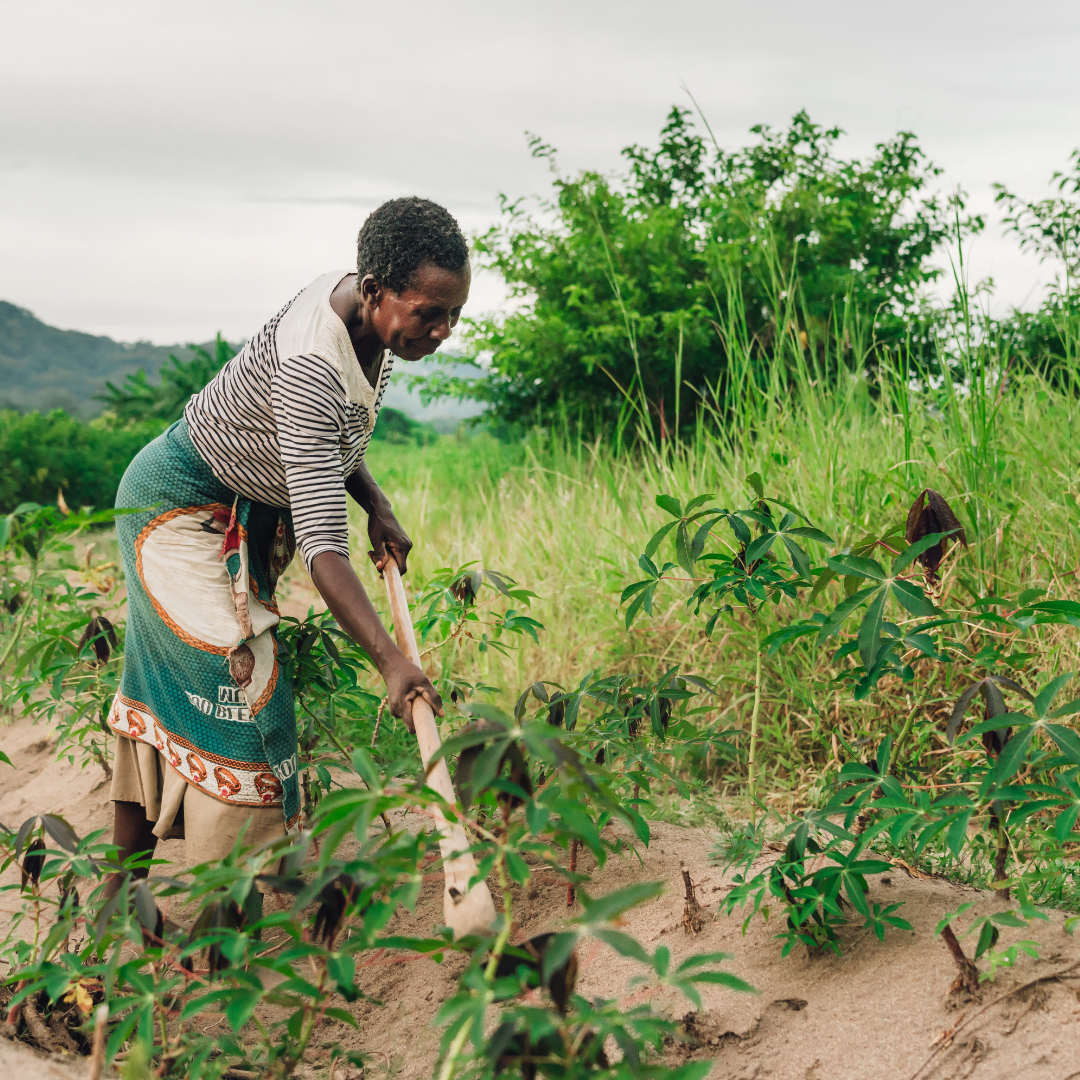
In this joint article, Mark Kenber, Executive Director of VCMI, and Mrs. Estherine Lisinge-Fotabong, Director of Agriculture, Food Security and Environmental Sustainability at the African Union Development Agency (AUDA-NEPAD) explore how carbon markets can support sustainable, climate-resilient agriculture in Africa.
Agriculture sits at the epicentre of the global climate challenge
The agriculture sector occupies half of the world’s liveable land, sustains the livelihoods and health of billions of people, and generates approximately one quarter of global greenhouse gas emissions1. The IPCC’s sixth assessment report makes it very clear that we will likely overshoot 1.5°C in the 2030s, and that limiting the damage requires an urgent, simultaneous scale-up of emissions reductions, removals, and adaptation. In no sector are these three imperatives more inextricably linked than in agriculture.
Sustainable farming practices – such as improved pasture management, low-till cultivation, agroforestry, drought-resistant crops, and the restoration of degraded land – can deliver all three at once: reducing emissions, sequestering carbon, and building the climate resilience that smallholder farmers and global food security systems so desperately need. In Africa, a focus on soil health is central to unlocking these benefits: improving soil organic matter, structure, nutrient cycling, and moisture retention not only increases carbon sequestration in soils but also underpins productivity gains and resilience to droughts and floods.
The central question is no longer what needs to be done, but how to finance a global transition at scale. Amid a widening climate finance gap and collapsing international development aid budgets, high-integrity carbon credit markets can offer a catalytic solution, provided they are embedded in the policy priorities and institutions of countries that host carbon projects. Most notably in Africa this includes the Comprehensive Africa Agriculture Development Programme (CAADP) as well as continental soil‑health strategies.
Momentum behind the transition to climate resilient agriculture is building
The EU’s Carbon Removals and Carbon Farming Regulation (CRCF)2, adopted in December 2024, established the first EU-wide voluntary framework for certifying carbon removals, including from the agriculture sector. Through the CRCF, EU farmers can generate new income streams by enhancing carbon sequestration in soils and vegetation through sustainable land management practices, otherwise known as carbon farming. This is a landmark step and can complement agricultural carbon credit methodologies recently approved under ICVCM’s Core Carbon Principles, and support fulfilment of the African Principles on Integrity and Equity on Carbon Markets.
But these developments come with both opportunity and risk. The EU’s policy architecture is likely to influence investments in climate resilient agriculture, including carbon farming, globally.
The critical question VCMI and our partners across the Global South are addressing is: will these investments reach the farmers across Africa, Latin America, and Asia who need them most, and protect their competitiveness?
If history is anything to go by, without significant technical support for both policymakers and the farming community, the answer will almost certainly be no.
Let’s consider Africa, where agriculture is a driving force of employment and food security, but is at risk of the rising tide of climate change.
Agriculture employs 42% of Africa’s workforce3 and contributes 30% of GDP4, yet the smallholder farmers and SMEs that produce the majority of the continent’s food are dangerously exposed to the droughts, floods, and erratic seasons that climate change is accelerating.
And yet with so much at stake, support for local farming communities to make the transition to climate resilient agricultural practices remains systemically underfunded5.
High-integrity carbon credit markets can and must be part of the solution in Africa
Done right, carbon credit markets can support agricultural practices that could deliver millions of tonnes of CO2 sequestration across the African continent each year, while building resilience for Africa’s most vulnerable communities. Critical to this outcome is alignment with CAADP’s investment‑led approach and the continent’s soil‑health priorities: carbon finance should flow into interventions that raise productivity, improve nutrition outcomes, and restore degraded lands while delivering verifiable climate benefits.
Despite this potential, to date only 1% of global carbon credit issuances have been for these kinds of agricultural practices6, and Africa remains largely on the sidelines of a market that could transform its food systems. The barriers are real: high complexity in navigating different carbon finance mechanisms, policy and regulatory gaps, weak institutional capacity, fragmented donor support, and a lack of the tailored market infrastructure needed to allow smallholders to participate meaningfully and equitably.
This is precisely why the work of VCMI, The African Union Development Agency (AUDA-NEPAD), regional carbon market alliances, and our other key partners matters so much — and why the foundations built in Latin America, explored in our previous blog post, must be extended to Africa and beyond.
Through its Access Strategies Program, VCMI empowers climate-vulnerable and developing nations to mobilize carbon finance to build resilience and drive sustainable development.
The Partnership for Agricultural Carbon (PAC), launched at COP28 and incubated through VCMI’s Access Strategies Program, delivers this directly for the agriculture sector. PAC is the only expert-led, regionally anchored, international initiative dedicated exclusively to helping governments and farmers access carbon markets for adaptive agriculture. PAC’s recent outputs — including an Investment Readiness Index and a dedicated training course for policymakers — reflect a commitment to practical tools that bridge ambition and implementation. The partnership combines technical expertise, regional legitimacy, and the operational capacity needed to connect ambitious governments with international climate finance opportunities.
Africa can build on this model and its existing policy architecture to build a thriving agricultural carbon market
The PAC model — and the hard-won lessons learned across Latin America — is directly transferable to the African context, where many similar challenges linked to market access and institutional readiness for agricultural carbon markets exist.
But Africa is not starting from scratch. There is an existing continental architecture that can be mobilised. CAADP, embedded within the African Union’s agricultural transformation agenda, provides a policy and investment platform that member states and regional economic communities can use to mainstream carbon finance into national agricultural investment plans.
CAADP’s emphasis on evidence‑based investment, public–private partnerships, and results‑oriented programming creates an entry point for integrating carbon‑favourable practices into public extension services, subsidy schemes, and national resilience plans. By aligning carbon market interventions with CAADP investment pillars and country compacts, governments can ensure carbon finance supports national food‑security goals, avoids perverse incentives, and strengthens agricultural value chains.
The window of opportunity to unlock agricultural carbon finance for Africa is narrowing
Carbon credit demand is growing, driven by Article 6 of the Paris Agreement, expanding compliance markets, the renewed confidence that integrity frameworks from ICVCM and VCMI are delivering, and the emerging government leadership to give corporate demand stimulus. Buyer coalitions are highly active in the nature-based solutions space, and significant latent demand exists through the insetting strategies of large agrifood producers. The conditions for a step-change in agricultural carbon finance have rarely been more favourable, and Africa must stand to benefit.
African nations now need focussed support to build the policy frameworks, institutional capacity, and community-level readiness that will allow governments and smallholder farmers to participate in this next phase of carbon credit markets on their own terms.
The alternative — an agricultural carbon market that leaves the world’s most climate-exposed rural communities behind — would be both a moral failure and a missed opportunity. VCMI’s Access Strategies work across Latin America shows it doesn’t have to be that way.
VCMI’s collaboration with AUDA is focussed on ensuring African countries can leverage the catalytic role carbon markets can play in delivering climate-resilient agriculture, and climate-resilient economies more broadly.
With the right partnerships and safeguards in place, Africa has the opportunity to lead a new era of climate-resilient agriculture that benefits farmers, economies, and the planet alike.