
Can carbon markets help Latin America lead the global transition to climate-resilient agriculture?
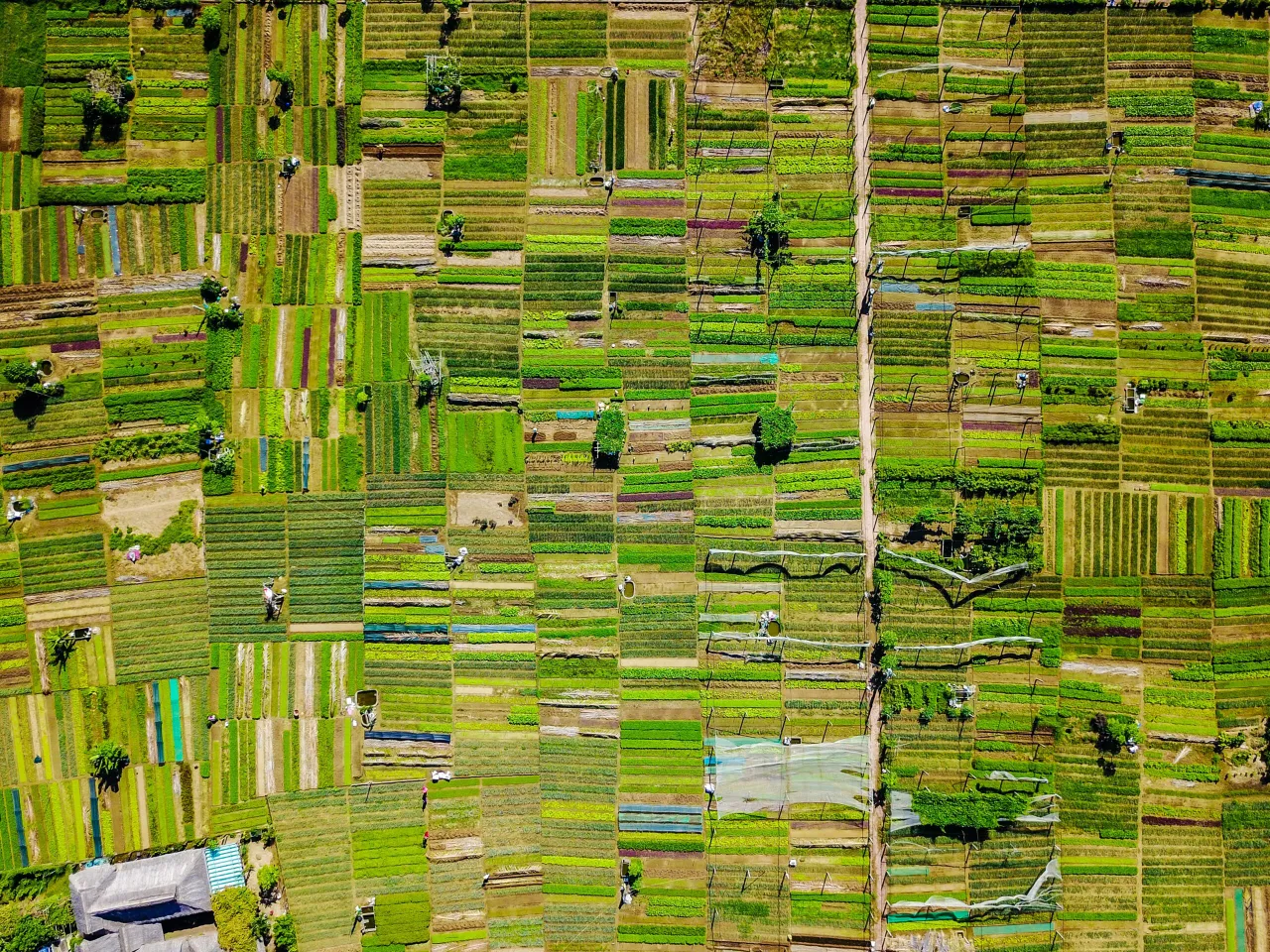
In this timely piece, Daniel Ortega Pacheco, Executive Director of the Partnership for Agricultural Carbon (PAC), shares a powerful perspective on the role of carbon markets in bridging the financing gap for climate-resilient agriculture.
What feeds the world, employs roughly one-third of the global workforce, sustains rural economies, anchors biodiversity, yet remains chronically underfinanced in global climate action? Agriculture.
The transition to resilient agriculture is at an inflection point – one that could translate lessons learned in Latin America and the Caribbean (LAC) into global climate and food security solutions.
The LAC region is ready to lead the transition to climate resilient agriculture, but finance is needed, and fast
LAC boasts a proud and highly skilled workforce of smallholder farmers whose livelihoods are being threatened by climate change. The region’s unique biodiversity and abundant biomass is capable of supporting climate resilient bioeconomy models, with strong potential in agroforestry and regenerative livestock systems, but only if finance is made available, and fast.
Recent data reveals a growing recognition of the need to finance climate resilient agriculture, but a concerning mismatch between flows of finance and the regions that need it most. From 2021-2022, global climate finance for agrifood systems tripled, reaching USD 94.9 billion,[1] but just 5% of total funding (about USD 6 billion) went to LAC, where agriculture accounts for 55% of emissions. To build sustainable agricultural solutions and rural resilience, the region needs a 27x increase in funding: USD 160 billion annually through 2050.
This imbalance in public finance for climate resilient agriculture is unfolding amid mounting fiscal constraints. In Central America, for instance, agricultural budgets have declined by an average of 8.57% annually over the past decade, and this decline could increase to up to 15% annually by 2030.
The conclusion is unavoidable: the region cannot rely solely on public finance to deliver the transition to climate resilient agricultural practices. Private finance must be part of the solution.
High-integrity carbon markets are well poised to catalyze the transition
With limited public finance on the table, high-integrity carbon markets can support LAC’s transition to climate resilient agriculture – driving regional impact, and developing a blueprint that the rest of the world can follow. Recent trends point to growing demand for carbon markets – including the acceleration of Article 6 agreements and approved methodologies – laying the groundwork for scaled transactions.[2]
Agriculture-based credits are also attracting a higher value – prices rose by 18–20% in 2024[3] – and surging retirements indicate increasing private-sector appetite.[4] But there is a risk that the opportunity presented by this growing demand for agriculture-based credits is not effectively leveraged in LAC, or other global south markets due to fragmented development of the market.
Carbon credit markets have historically developed project by project, but this model alone cannot mobilize the scale of finance required for the transition to climate resilient agriculture. Rather than isolated projects, investors increasingly seek system-level coherence, with markets underpinned by government-led frameworks that reduce risk, aggregate supply, and ensure environmental integrity. To lead the transition, LAC needs to transform carbon markets from fragmented credit generation into structured investment platforms that can mobilize debt-free finance that helps governments and farmers catalyze the sector’s just transition.
Governments need support to leverage catalytic carbon finance for climate resilient agriculture
To achieve this, governments must lead the way. A scale-up approach to agricultural carbon markets – characterized by national carbon project inventories, robust territorial or sectoral MRV systems, benefit sharing frameworks, and the integration of carbon markets within national climate strategies – is essential.
For institutional investors, development finance institutions, and corporates with long-term supply chain exposure, scale-up approaches reduce transaction costs and enhance confidence. They also serve to create the enabling environment for catalytic capital – such as blended finance, guarantees, and results-based payments – which can deliver a multiplier effect on top of carbon revenues, supporting climate resilient growth, strengthening rural incomes, enhancing smallholder resilience, and improving international competitiveness.
But designing scale-up approaches for agricultural carbon markets requires significant institutional capacity and tailored expertise within governments. Analysis by the Partnership for Agricultural Carbon (PAC) indicates that several Latin American countries, including Brazil, Colombia and Peru, could attract more finance by enhancing ‘investment readiness’ for agricultural carbon markets.
The challenge is therefore how governments in LAC – and beyond – can build and position carbon credit markets as structured investment platforms for delivering climate resilient agriculture. Promising developments in LAC are already underway:
- Peru’s Ministry of Agricultural Development and Irrigation [5] to promote participation of the sector in carbon markets and help famers access climate finance through high-integrity carbon credits.
- Paraguay and Peru are also front runners in Article 6 implementation, signing bilateral cooperation agreements with multiple countries, including partnerships with Singapore, which cover generation of carbon credits from sustainable grazing and rice methane reduction.
- Bolivia has recently started work on a national regenerative agriculture and livestock program intended to support climate mitigation in the agricultural sector. The initiative will establish the systems needed to measure soil carbon changes across large agricultural areas, laying the foundations needed for future carbon projects.
To take the role of carbon markets in the climate resilient agriculture transition across the LAC region, and worldwide, governments need tailored support. VCMI’s Access Strategies Program is designed to find and fill gaps in carbon markets participation around the world. Through the Program, the Partnership for Agricultural Carbon (PAC) has been supporting governments across LAC to build the institutional conditions needed to effectively leverage high-integrity carbon finance mechanisms in support of climate resilient agricultural solutions, through diagnostics, readiness frameworks, policy tools, and capacity-building programs that translate ambition into action. PAC is the only expert-led, international initiative dedicated exclusively to supporting governments and farmers to access the power of carbon markets for climate resilient agriculture.
With coordinated support, Latin America and the Caribbean can be a laboratory for the global transition to climate resilient agriculture
With coordinated support for governments to pioneer large-scale agricultural carbon markets, Latin America and the Caribbean has the potential to position itself as a strategic partner in delivering sustainable and adaptive agrifood systems for the world.
By prioritizing readiness and piloting innovative approaches Latin America and the Caribbean can be a ‘global laboratory’ for scaling high-integrity, market-ready approaches that fast track the transition to a more resilient agricultural sector. Other regions with rich natural capital and large-scale agriculture economies can follow in its footsteps.
The opportunity is clear. Agriculture cannot remain the underfunded frontier of climate action. If LAC can build the institutional readiness needed to scale high-integrity agricultural carbon markets, it will not only attract transformative investment but redefine the entire sector’s role in the global climate transition.
About the Partnership for Agricultural Carbon
- The Partnership for Agricultural Carbon (PAC) is the only expert-led, international initiative dedicated exclusively to supporting governments and farmers to access the power of carbon markets for sustainable agriculture.
- PAC is incubated and operationalized through VCMI’s Access Strategies Program, which supports countries to meaningfully participate in, and benefit from, high-integrity carbon markets.
- PAC accelerates investment in agricultural carbon markets by supporting governments and famers to deliver clear, enabling policies, robust MRV systems, and effective local impact plans that build confidence amongst private sector investors.
[1] Climate Policy Initiative’s (CPI) Landscape of Climate Finance for Agrifood Systems 2025
[3] 2025 State of Voluntary Market report
[4] 2025 State of Voluntary Market report
[5] Guide to promote the participation of producers in the Agricultural and Irrigation sector in the Voluntary Carbon Market